In-situ analysis of rheological and electrochemical properties of carbon particle suspensions
System Materials Processing Lab (SMPL), Dankook University, South Korea
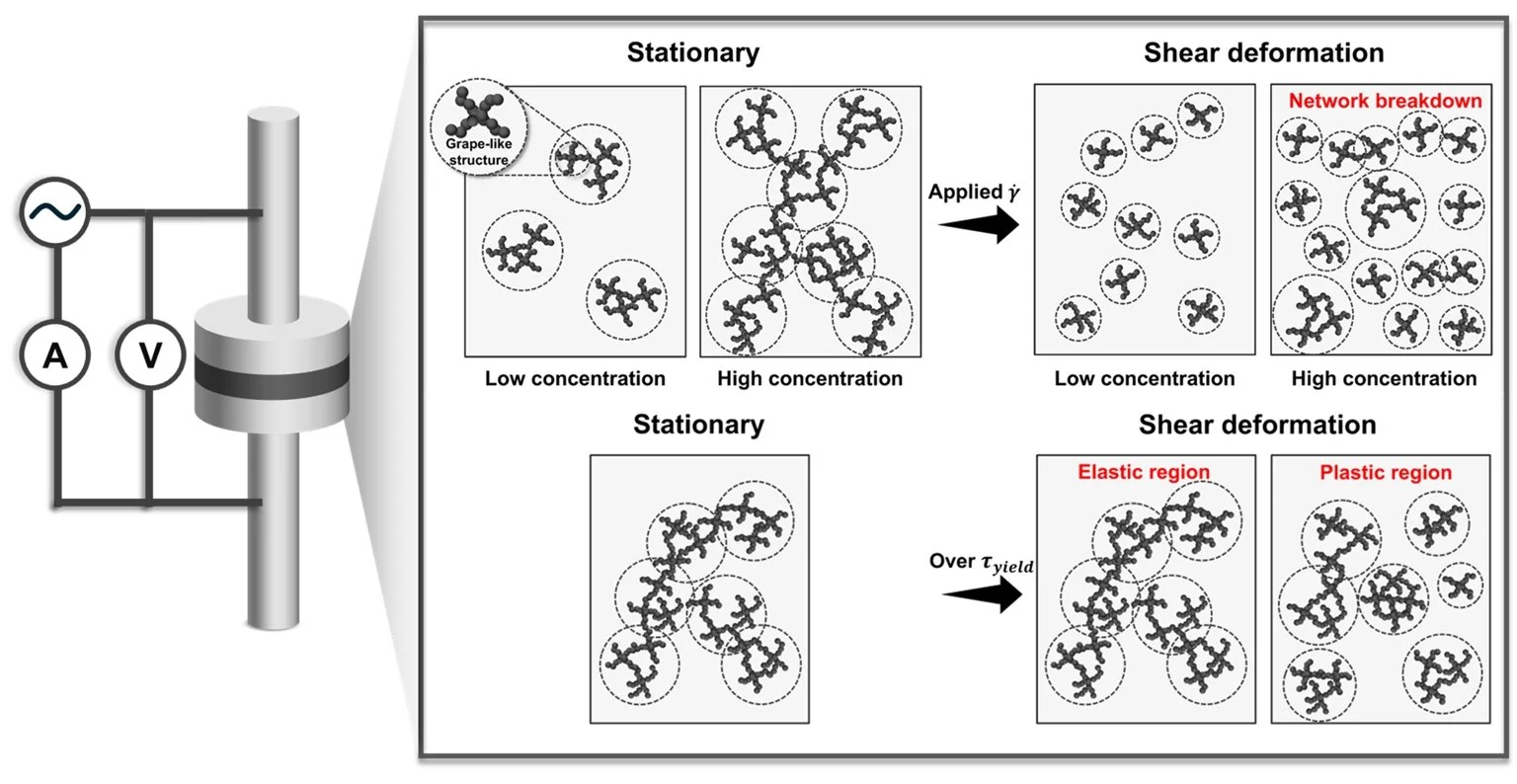
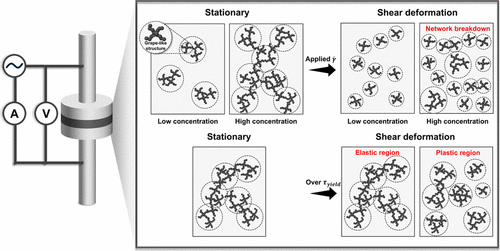
Investigating internal structure of carbon black nanoparticle suspensions under shear flow using a combined rheological and electrochemical impedance analysis called in-situ analysis.
Developing next-generation rheology-based analysis techniques and conductive composites to advance soft matter technologies for energy storage area.
I integrate rheological and electrochemical analysis to understand the internal dynamics of soft and conductive materials. By developing novel analytical techniques and functional composites, my research aims to translate fundamental insights into next-generation energy storage technologies and advanced material systems.
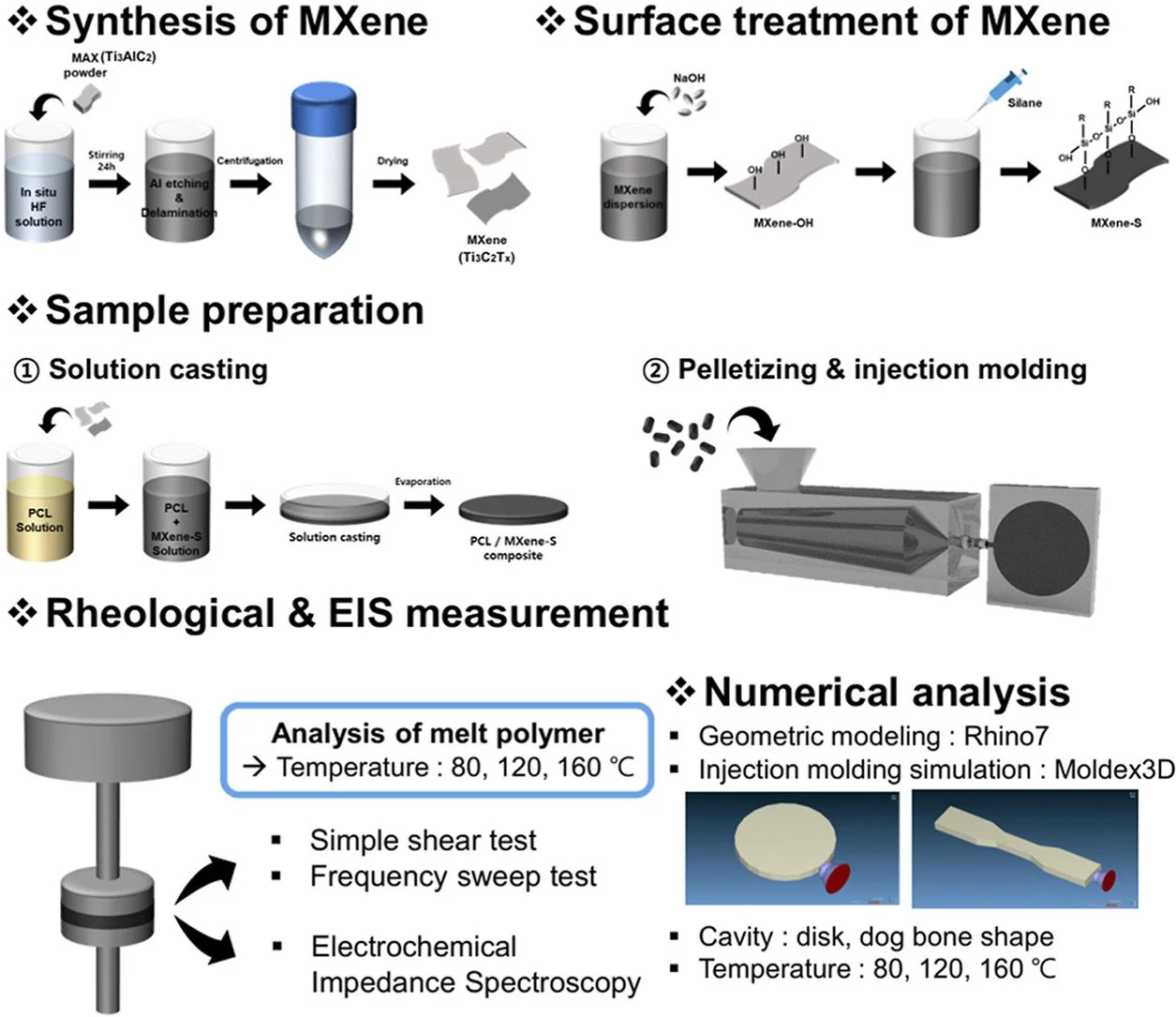
Characterization of polycaprolactone/Ti3C2TX MXene nanocomposites fabricated via injection molding
System Materials Processing Lab (SMPL), Dankook University, South Korea
Developed PCL/MXene nanocomposites for bioelectronic using injection molding, achieving enhanced thermal, mechanical, rheological, and electrochemical properties of the PCL/MXene nanocomposite
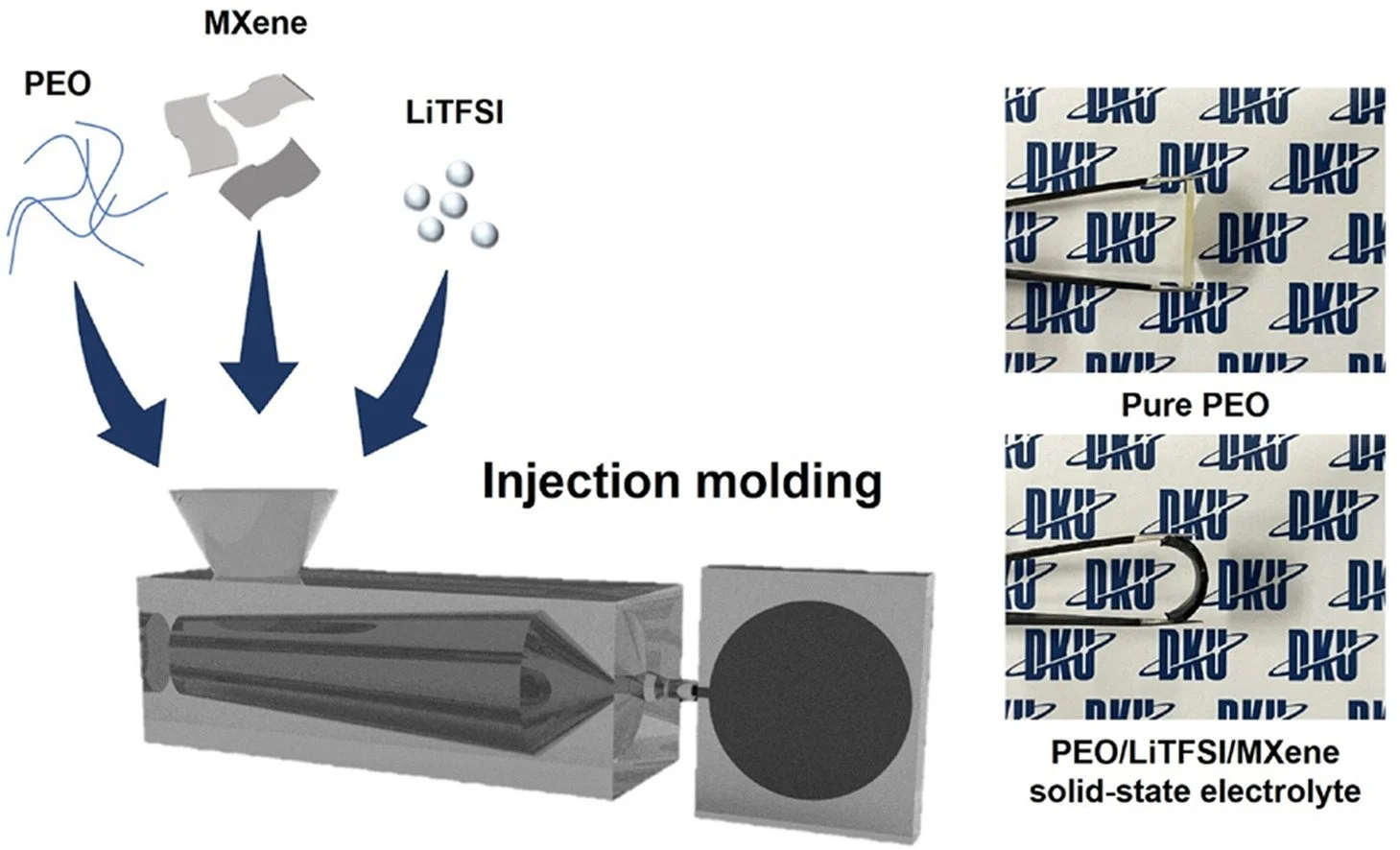
Injection-molded PEO/MXene nanocomposite for polymer-based solid-state electrolyte
System Materials Processing Lab (SMPL), Dankook University, South Korea
Developed PEO/MXene nanocomposites for solid-state electrolytes using injection molding, achieving an 80-fold increase in ionic conductivity through HFand MILD-etched MXenes
Projects
Research
In Situ Analysis of Rheological and Electrochemical Properties of Carbon Nanoparticle Suspension
ACS applied engineering materials
Researched the carbon black nano-particle suspensions to understand the internal structure under the flow state used
by the rheological and electrochemical in-situ analysis to detect mechanical and electrochemical change.
Research
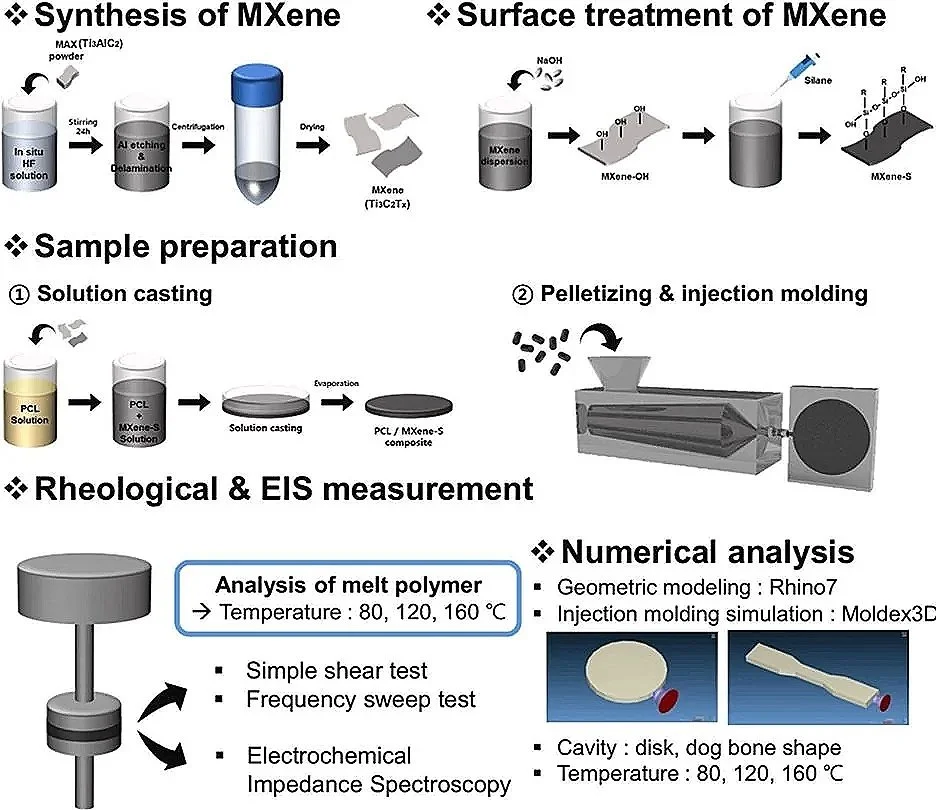
Characterization of polycaprolactone/Ti3C2TX MXene nanocomposites fabricated via injection molding
Polymer
Developed PCL/MXene nanocomposites via injection molding to create electrically conductive polymer composites, with systematic investigation of rheological, electrical, mechanical, and thermal properties.
Research
Injection-molded PEO/MXene nanocomposite for polymer-based solid-state electrolyte
Composites Communications
Developed PEO/MXene nanocomposites for solid-state electrolytes using injection molding, achieving an 80-fold increase in ionic conductivity through HFand MILD-etched MXenes, with analysis of rheological, electrical, mechanical, and thermal properties.

Industry project
Analysis of the hydrodynamic and electrical characteristics of Lithium-ion Battery (LIB) anode slurry
CCMP(Center for Coating Materials and Processing), funded by LG Energy Solution Inc.
Researched the dispersity of particles for analyzing the internal structure in LIB anode slurry, focusing on adsorption by CMC of silicon and graphite using a rheometer and EIS to detect the distribution.
Industry project
Characterization of dispersibility and internal structure of hydrogen fuel cell ink
CCMP(Center for Coating Materials and Processing), funded by Hyundai Motor Company
Investigated how material/solvent ratio and formulation parameters such as Pt/C and ionomer dispersion affect ink composition, analyzing dispersity through ion transfer under varying pH via EIS and equivalent circuit modeling (EEC).
Undergraduate project
Isolated soy protein and chitosan laminar films for edible package
Hackathon Idea Competition (The Grand Prize and Honor)
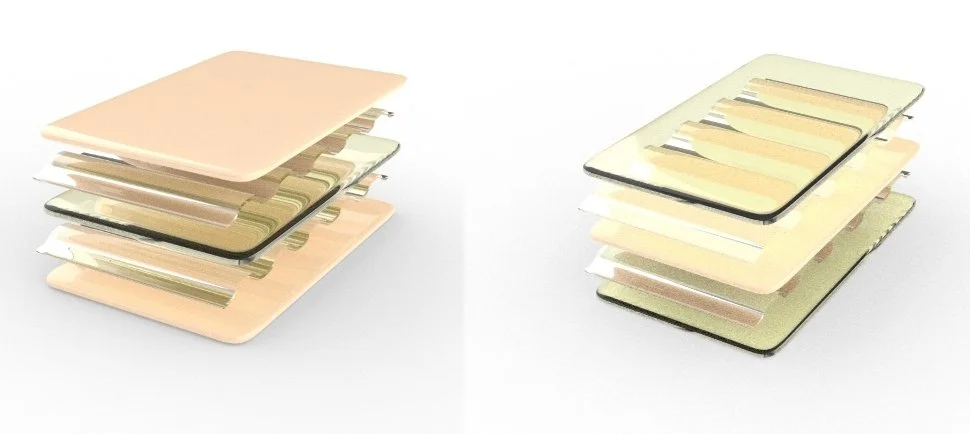
Our team aimed to make edible sustainable films. We selected packaging material, isolated soy protein and chitosan, and to enhance the adsorption between the layers several edible binders were suggested.
Patent
Edible food packaging
Korean Intellectual Property Office
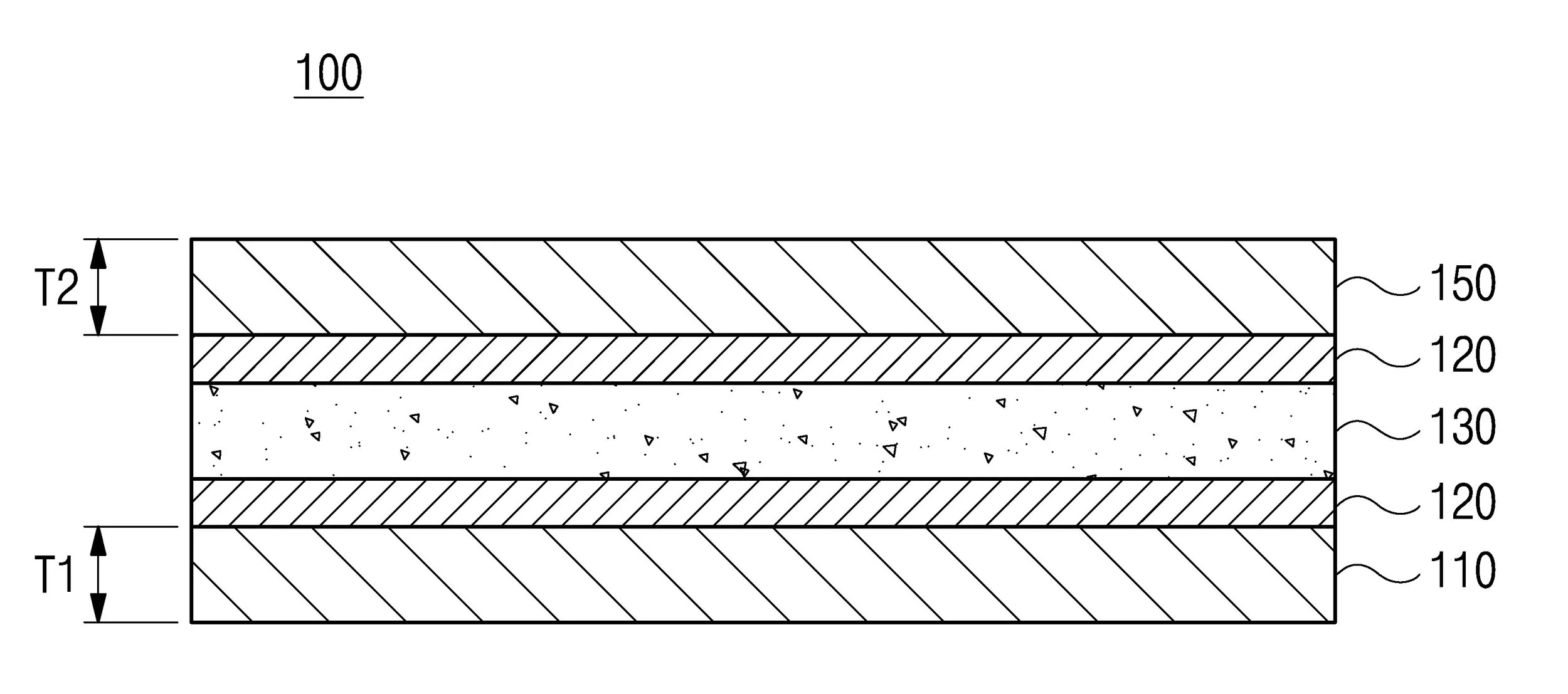
This invention relates to an edible food packaging material comprising a laminated structure of a first chitosan film layer, a soybean protein film layer, and a second chitosan film layer, bonded together by adhesive layers.